
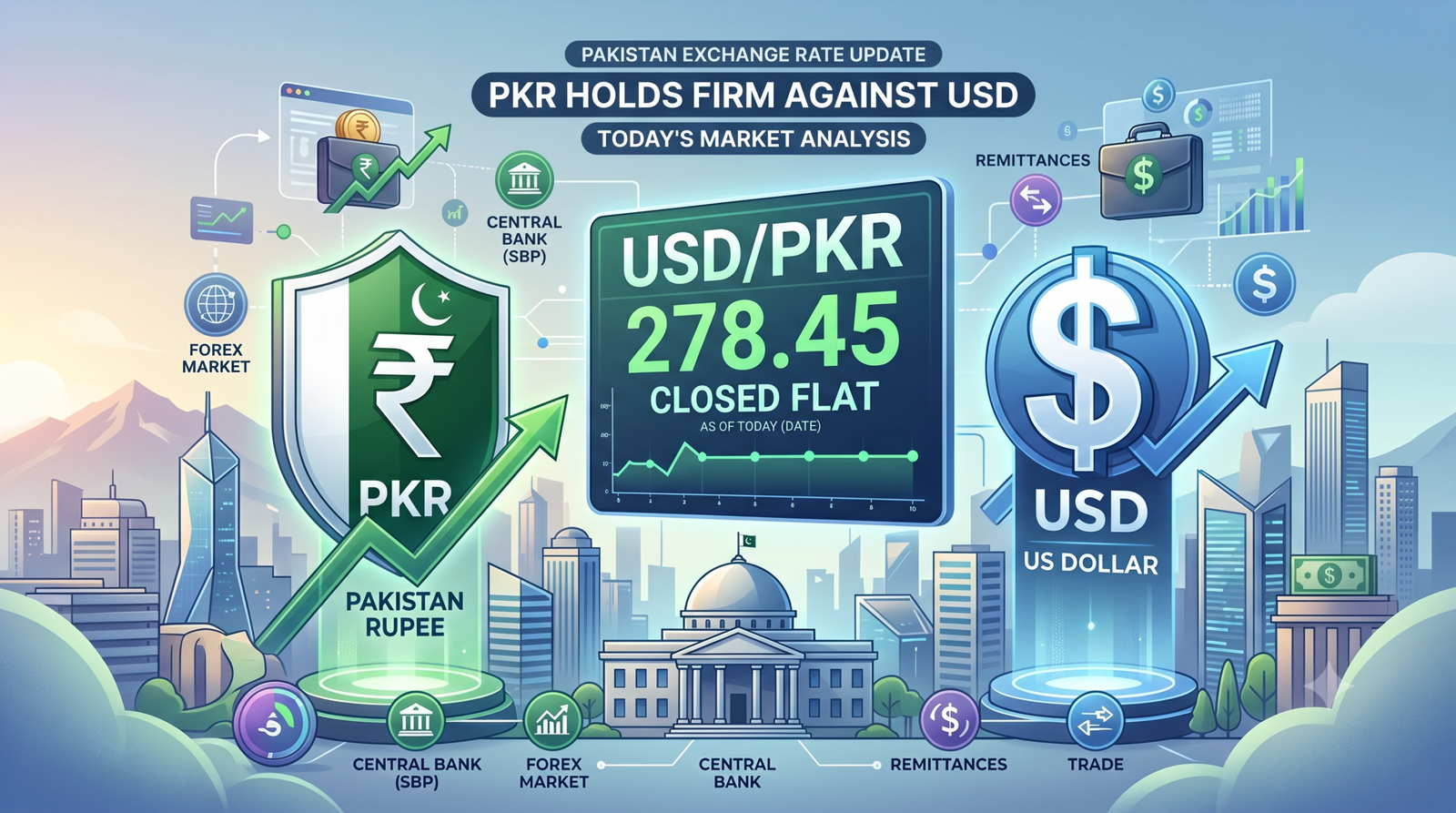
Pakistan Rupee Holds Firm Against US Dollar Amid Strategic Central Bank Interventions
ISLAMABAD — The Pakistani Rupee (PKR) maintained its stable trajectory against the US Dollar (USD) in today’s trading session, showcasing continued resilience despite broader macroeconomic pressures and shifting global economic dynamics.
According to data released by the State Bank of Pakistan (SBP) and leading currency dealers, the greenback closed flat in both the interbank and open markets, hovering securely within the established trading bands that have characterized the currency market over the recent quarters.
Interbank and Open Market Rates Today
In the interbank market, the US Dollar closed at 278.45 PKR, showing a negligible fluctuation of just a few paisas from the previous day’s close. The open market mirrored this steady pattern, with the dollar being bought at 279.10 PKR and sold at 280.30 PKR.
This stability marks a significant departure from the historical volatility that long plagued the local currency, where sudden, sharp depreciations frequently disrupted domestic trade projections and accelerated imported inflation. Analysts credit the tightening of exchange regulations and strict monitoring of unauthorized currency outflows for creating a predictable trading environment.
Central Bank Policies and Economic Grounding
A major catalyst behind the rupee’s steadiness is the proactive monetary stance sustained by the State Bank of Pakistan. The central bank has kept policy interest rates relatively high to anchor inflation expectations and curb speculative currency hoarding.
Furthermore, strict administrative measures implemented over the past year have largely eliminated the gray market—often referred to as the Hawala/Hundi network. By channeling foreign exchange liquidity exclusively through official banking avenues and registered exchange companies, the government has successfully synchronized the interbank and open market spreads, keeping them well within the boundaries prescribed by international lenders.
Remittances and Foreign Reserves Provide Cushion
The rupee’s defensive posture is also bolstered by a steady influx of workers’ remittances from overseas Pakistanis, particularly from the Gulf region, the United Kingdom, and the United States. These consistent dollar inflows have helped offset the country’s extensive import bill, especially amid fluctuating international commodity and crude oil prices.
Concurrently, Pakistan’s official foreign exchange reserves held by the central bank have remained at a buffer level sufficient to meet short-term debt servicing obligations, reducing the immediate risk of balance-of-payments distress that typically triggers a run on the local currency.
Market Outlook and Future Vulnerabilities
While today’s parity brings a sigh of relief to importers and policymakers, market experts warn that structural external vulnerabilities remain. As Pakistan navigates upcoming fiscal budget obligations and seasonal shifts in commercial import payments, demand for the greenback could experience localized surges.
Financial analysts emphasize that maintaining this currency stability in the medium term will rely heavily on expanding the country’s export base—particularly in the IT and textile sectors—and securing timely rollovers of bilateral loans. For now, the rupee remains on solid ground, offering businesses a much-needed window of macroeconomic predictability.
