
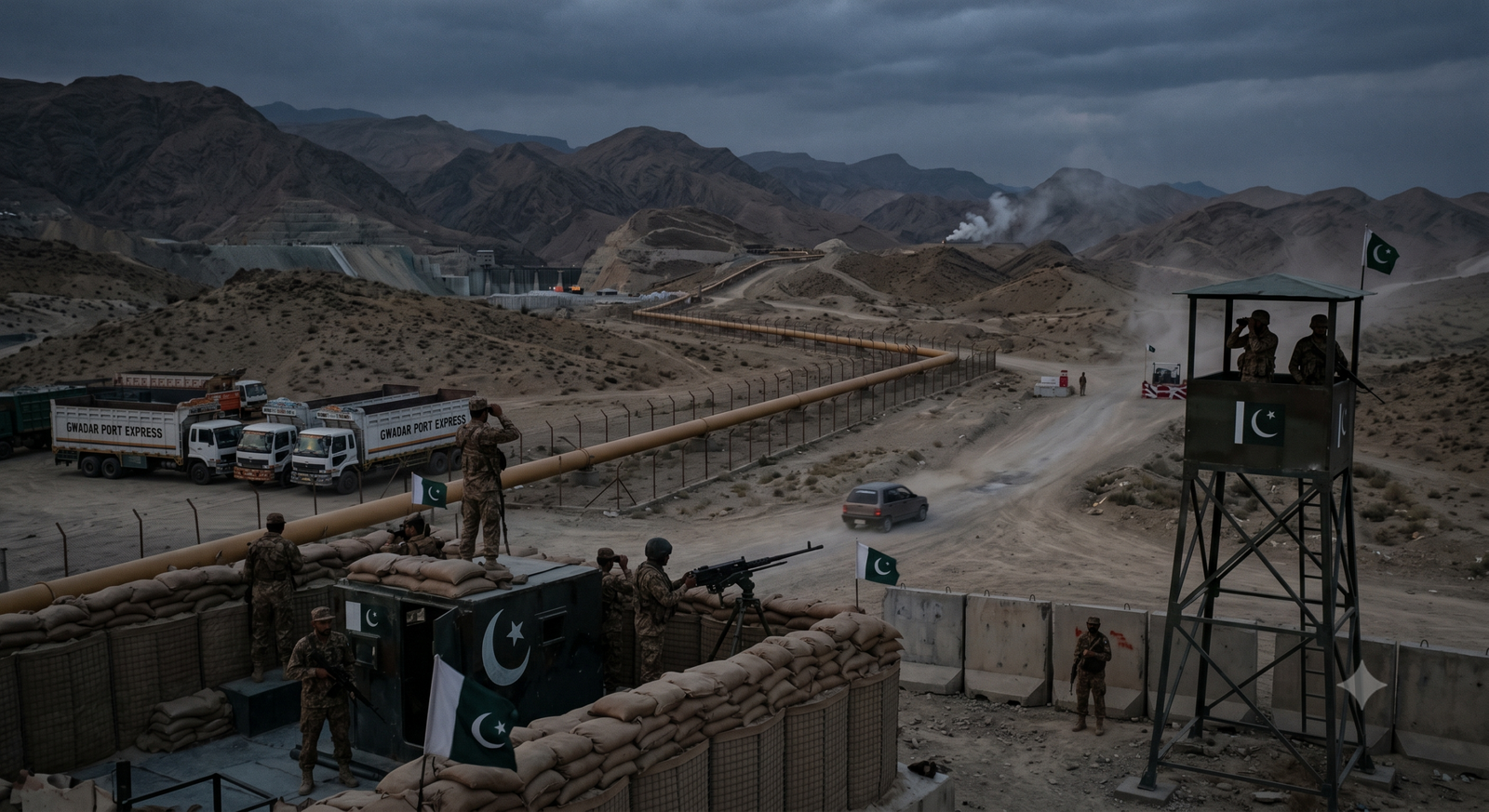
Anatomy of a Hybrid Crisis: The Escalating Insurgency in Balochistan
QUETTA — Pakistan’s largest, most resource-rich, yet least populated province is undergoing its most volatile security crisis in decades. What historically manifested as a low-level, intermittent ethnic guerrilla conflict has morphed into a lethal, highly coordinated hybrid insurgency.
The security paradigm in Balochistan shifted dramatically following a massive wave of synchronized assaults across nine districts—including Quetta, Gwadar, Mastung, and Nushki. Spearheaded by the Baloch Liberation Army (BLA) under its “Operation Herof II” (Black Storm) offensive, the attacks targeted high-security infrastructure, police stations, transport networks, and civilian hubs simultaneously. The state’s massive kinetic response, labeled “Operation Radd-ul-Fitna,” resulted in hundreds of casualties on both sides, underscoring the severe entrenchment of the conflict.
The Shift Toward “Hybrid” Tactics and High Lethality
The modern phase of the Balochistan insurgency departs sharply from traditional hit-and-run tactics executed by isolated tribesmen. Security analysts note two deeply concerning developments that have amplified the lethality of groups like the BLA and the Baloch Liberation Front (BLF):
-
The Tactical Integration of Women: Militant groups have increasingly weaponized propaganda by shifting toward highly visible, joint suicide missions featuring female fighters.
-
The Proliferation of Advanced Weaponry: Following the 2021 U.S. withdrawal from Afghanistan, a massive influx of military-grade gear—including thermal imaging, night-vision devices, and M4 assault rifles—has filtered through regional gray markets. This equipment allows insurgents to execute highly precise, dark-of-night ambushes on security outposts.
Furthermore, a growing, dangerous operational nexus is forming between secular Baloch separatists and hardline Islamist groups like the Tehreek-e-Taliban Pakistan (TTP). Despite vastly different ideological foundations, these networks increasingly share intelligence, safe havens, and black-market supply lines to compound the state’s security challenges.
Core Grievances: Economy, Resource Control, and Infrastructure
At the heart of the unrest lies a decades-long dispute over the exploitation of Balochistan’s immense natural wealth. The province is globally renowned for its vast copper and gold reserves at Reko Diq and Saindak, alongside critical natural gas fields that power industrial centers across neighboring Punjab and Sindh provinces.
[Local Natural Resources] ──► [Extracted for Federal/Foreign Projects]
                                           │
                                           ▼ (Perceived Disenfranchisement)
[Socioeconomic Underdevelopment] ──► [Radicalization & Insurgent Recruitment]
Local populations argue that despite yielding billions in mineral revenues, Balochistan remains on the lowest rungs of human development indicators, plagued by chronic poverty, lack of clean drinking water, and negligible local employment.
The introduction of multi-billion dollar international infrastructure developments—most notably China-Pakistan Economic Corridor (CPEC) projects centered around the deep-sea port of Gwadar—has accelerated this friction. Separatist factions brand these megaprojects as colonial-style exploitation designed to alter local demographics, frequently turning their weapons directly toward Chinese engineers and state-backed infrastructure assets.
Rights Movements, Radicalization, and State Response
The state’s heavy-handed security measures have further strained its relationship with the local population. Large-scale military sweeps and the widespread, unresolved issue of enforced disappearances have heavily fractured public trust.
| Metric / Dimension | Strategic Dynamics & Realities |
| Primary Insurgent Groups | Baloch Liberation Army (BLA), Baloch Liberation Front (BLF) |
| New Combat Framework | Increased use of suicide squads, small commercial drones, and thermal imagery |
| Key Catalysts of Discontent | Perceived economic exclusion from Gwadar (CPEC), Reko Diq mines, and federal gas revenues |
| Civil Society Intersections | Large non-violent human rights demonstrations (e.g., Baloch Yakjehti Committee) |
This erosion of rule of law has created a complex socio-political ecosystem. Non-violent civil rights platforms, such as the prominent Baloch Yakjehti Committee (BYC), have successfully mobilized tens of thousands of citizens to protest state overreach and missing persons. However, observers warn that when peaceful political dissent is met with administrative coercion or internet blockades, it inadvertently expands the recruiting pool for armed insurgent factions who exploit narratives of existential victimhood.
The Path Forward: Balancing Kinetic Defense with Credible Dialogue
Pakistan’s security apparatus maintains that robust counter-terrorism operations are essential to preserve territorial integrity, safeguard foreign investments, and eliminate armed proxies. Yet, decades of cyclical violence indicate that a purely military approach cannot permanently stamp out the unrest.
To dismantle the infrastructure of the insurgency, Islamabad must look past kinetic warfare. Lasting stabilization will require transparent political engagement, structural adjustments ensuring local communities receive the lion’s share of mineral revenues, and a definitive, legal resolution to human rights grievances. Until structural development matches the pace of military engagement, Balochistan will remain an volatile frontier.
